 History:
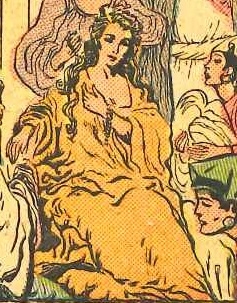
QUEEN ESTHER
Real Name: Esther
Identity/Class: Human (Jewish/Israelite, 5th
century BC)
Occupation: Queen of Persia
Group Membership: None
Affiliations: King Ahasuerus, Hathak, Hegai, Mordecai
Enemies: Bigthana, Haman the Agagite, Teresh
Known Relatives: Abihail (father, deceased), Mordecai (cousin, adopted father), King Ahasuerus (husband)
Aliases: Hadassah (Hebrew name)
Base of Operations: Susa, Persia
First Appearance: The Book of Esther (circa 5th
century BC);
(Marvel) Bible Tales for Young People I#5 (March, 1954)
Powers/Abilities: Queen Esther possessed great wisdom and piety.
Height:
(approximately 5'7")
Weight: (approximately 125 lbs.)
Eyes: Blue
Hair: Blonde
History:
(Book of Esther) - Esther was among the descendants of Israelite people who had been taken into captivity in Babylon. When her mother and father died her cousin Mordecai assumed the responsbility of caring for her.
(Book of Esther/Bible Tales for Young People I#5/2) - After being slighted by his wife Queen Vashti, KingA hasuerus of Persia announced he was seeking a new bride from among the young virgins within the empire. Esther was among those brought to King Ahasuerus' harem in Susa, where she was placed in the trust of Hegai, a eunuch. Mordecai worked in Susa and told Esther not to reveal her ethnicity or family background.
(Book of Esther) - Winning favor from Hegai in the harem, Esther was given beauty treatments, special food and eentually seven attendants as she assumed the best place in the harem. Every day Mordecai walked by the courtyard of the harem to learn how Esther was faring. Before being presented to King Ahasuerus, Esther underwent 12 months of beauty treatments: 6 months with oil of myrrh and 6 with perfumes and cosmetics. When her time to be presented to King Ahasuerus came, Esther asked Hegai for his advice on what to bring from the harem to the king's palace.
(Book of Esther/Bible Tales for Young People I#5/2) - Arriving at the palace, Esther won favor with everyone who saw her and King Ahasuerus found her more attractive than any of the other women. King Ahasuerus declared Esther his new queen, threw a banquet for her and proclaimed the day a holiday.
Mordecai discovered two of King Ahasuerus' officers were conspiring to murder the king and passed word to Queen Esther, who informed the king and gave credit to Mordecai for his information. King Ahasuerus found the accusation was true and had the two men put to death.
Some time afterward, King Ahasuerus honored Haman the Agagite, granting him an esteemed place higher than any other nobles in his court. While other officials would bow to Haman, Mordecai refused. Learning Mordecai was a Jew, Haman schemed to use his disobedience as a pretext to destroy all the Jews in the empire. Haman told King Ahasuerus the Jews had different customs and didn't obey his laws, convincing the king to issue orders which would allow Haman to eradicate all the Jews in the empire.
(Book of Esther) - Mordecai went into mourning; hearing of this, Queen Esther sent the king's eunuch Hathak to find out what was troubling him. Mordecai explained what Haman had done and the king had ordered and sent word with Hathak to tell Esther to beg to the king for mercy. Esther sent back a message reminding Mordecai that if she went to the king without being summoned he could sentence her to death. To this Mordecai responded that she too might be killed if the king's order was carried out and that perhaps she was placed where she was for a time such as this. Esther agreed to approach the king and told Mordecai to have all the Jews in Susa fast for three days.
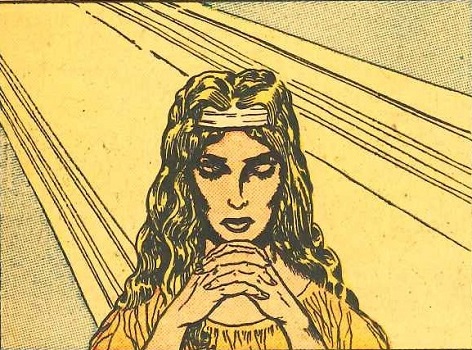
(Bible Tales for Young People I#5/2) - Esther prayed to Jehovah for a way out of the darkness for her people.
(Book of Esther/Bible Tales for Young People I#5/2) - Esther went to see the king who was not upset to see her and granted her whatever she wanted, even up to half his kingdom. She asked him to hold a banquet with Haman, to which the king agreed. At the banquet the king again asked her what she wanted but she again asked for the two men to attend a banquet the next day. Between the two banquets Haman began scheming how he would kill Mordecai but when Esther gently reminded the king that he hadn't rewarded Mordecai for exposing the two conspirators he granted Mordecai great honors in his court.
When the 2nd banquet arrived, King Ahasuerus again asked Queen Esther what she wanted. This time she exposed her Jewish origins and told him that someone in his court sought to have them all annihilated. When the king asked who this person was she identified Haman. Haman tried to beg to Esther for mercy but this angered the king and he put Haman to death on the gallows.
(Book of Esther) - After Haman's death, Esther told the king how Mordecai was related to her. The king took his signet ring which had been worn by Haman and gave it to Mordecai, granting him Haman's estate. Queen Esther pled the king to withdraw the order Haman sponsored which condemned all the Jews to death. The king invited Mordecai to write up a new orders on his behalf, promising to sign his name to it. Mordecai drafted an edict which protected the many of the Jews' rights, include rights of assembly and protection. Jews across the land rejoiced thanks to Esther and Mordecai's actions.
The Jews then defended themselves against the men Haman had sent out to kill them. Queen Esther thereafter gave orders for Haman's ten sons to be executed as their father was. Queen Esther signed papers celebrating this victory and comemmorating them as the days of Purim.
Comments: Derived from the Biblical character; adapted by an unidentified writer and Mort Lawrence.
The Book of Esther is an unusual one; it's the only book in the entire Bible which doesn't mention God and it is notorious for omitting any mention of Him, to the extent that some question why it's been kept in the Old Testament. Further to which, there's also a lot of scholarship questioning whether it's even a historical narrative as the historical details haven't been corroborated with Persian histories. Let's say it's an unconventional book and leave it at that.
It's noteworthy, therefore, that the Atlas adaptation of this story - although condensed to a mere 5 pages - adds a reference to God in the story.
King Ahasuerus is referred to in some translations as King Xerxes I.
In the Book of Esther, the two conspirators had nothing to do with Haman, but Bible Tales for Young People identified them as Haman's underlings, working under his orders.
In the Book of Esther, Haman was impaled on the enormous pole he intended to kill Mordecai upon; in Bible Tales for Young People, he died on the gallows.
This profile was completed on 11/24/2025 but its publication was delayed, as it was intended for the Appendix's 25th anniversary celebratory event.
Profile by Prime Eternal.
CLARIFICATIONS:
Queen Esther should not be confused with:
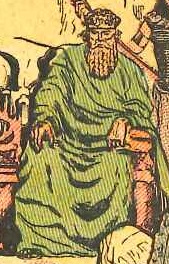
King Ahasuerus was the king of Persia. After his Queen Vashti refused to come to his presence he made plans to remove her as queen, taking locals virgins for his harem until a choice was made. Eventually he chose Esther as his queen, although he didn't know she was a Jew. The king was saved from a conspiracy by Bigthana and Teresh to assassinate him when Queen Esther brought word from Mordecai which exposed the plot. Later, the king granted his nobleman Haman a free hand in exterminating Persia's Jews when Haman claimed the Jews were disloyal subjects, but Mordecai helped sway Queen Esther to confront the king and save their people. Queen Esther first reminded the king of how Mordecai's actions had saved his life, then revealed she herself was a Jew and could therefore be killed by Haman. The king swiftly put Haman to death and authorized new orders which Mordecai wrote up that offered protections to the Jews and enabled them to fight back against the men Haman had already dispatched.
--Book of Esther/Bible Tales for Young People I#5/2
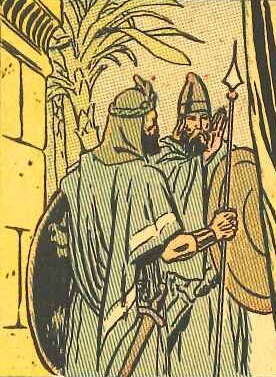
Bigthana and Teresh were two officers to King Ahasuerus who guarded the gate to the king's palace in Susa. Taking instructions from Haman, they schemed to assassinate the king. However, Mordecai overheard the two guards while they were scheming and he informed Queen Esther, who relayed this information to the king. The king had the two men put to death. Mordecai was later honored by King Ahasuerus for saving him from the conspirators.
--Book of Esther/Bible Tales for Young People I#5/2
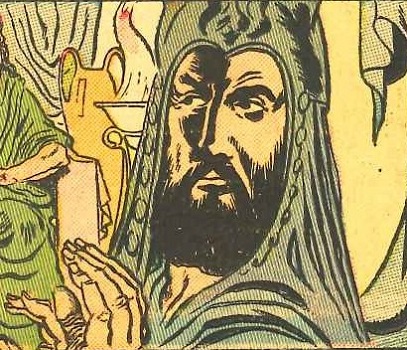
Haman was a prominent nobleman in King Ahasuerus' court. His wife was Zeresh. Haman was involved in a plot with the guards Bigthana and Teresh to assassinate King Ahasuerus; although the plot was foiled by Mordecai, Haman's involvement was not revealed. Haman resented Mordecai for not bowing to him in public and extended his fury against all of the Jews, eventually convincing King Ahusuerus to grant him a free hand in exterminating all the Jews of Persia on the pretext that they were disloyal subjects. While Haman raised a gallows upon which to hang Mordecai he was invited to two banquets with the king and Queen Esther. Queen Esther first reminded the king of how Mordecai had saved his life and the king granted Mordecai honros, infuriating Haman. At the second banquet, Queen Esther revealed she was a Jew and would therefore be killed by Haman with the permissions King Ahasuerus had granted. This turned the king against Haman and he had him killed on the gallows he had built for Mordecai. Subsequently, the king granted Haman's estate to Mordecai and put all ten of Haman's sons to death.
--Book of Esther/Bible Tales for Young People I#5/2
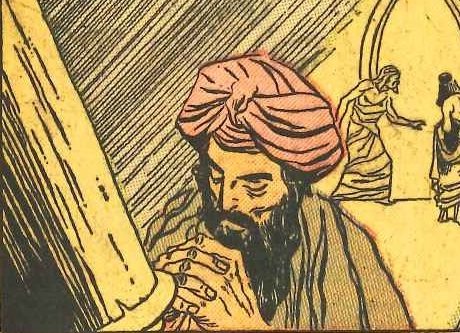
Mordecai was a Jew who lived in Persia. He was a cousin to Esther and took care of her after her parents died. Mordecai lived in Susa and encouraged Esther as she entered King Ahasuerus' harem while also advising her to keep her Jewish origins a secret. After Esther became queen, Mordecai overheard the guards Bigthana and Teresh scheming to murder King Ahasuerus. Mordecai warned Queen Esther and she warned the king, leading to the arrest and execution of the conspirators. The conspirators' leader, Haman, then took aim at Mordecai, insulted because Mordecai did not bow to him in the street. Haman used Mordecai's behavior as a pretext to convince King Ahasuerus to grant him the leeway to exterminate all the Jews in Persia but Mordecai appealed to Esther for aid. Queen Esther reminded the king how Mordecai had saved his life, resulting in the king granting honors to Mordecai. When Esther then revealed she was a Jew and would be killed by Haman, the king had Haman executed. The king gave Mordecai the freedom to write up orders protecting all the Jews in Persia, which the king then signed. Mordecai was given the deceased Haman's estate and titles for himself.
--Book of Esther/Bible Tales for Young People I#5/2
images: (without ads)
Bible Tales for Young People I#5/2, page 1, panel 5 (main)
Bible Tales for Young People I#5/2, page 4, panel 4 (face)
Bible Tales for Young People I#5/2, page 1, panel 1 (Ahasuerus)
Bible Tales for Young People I#5/2, page 3, panel 3 (Bigthana and
Teresh)
Bible Tales for Young People I#5/2, page 4, panel 7 (Haman)
Bible Tales for Young People I#5/2, page 2, panel 1 (Mordecai)
Appearances:
Bible Tales for Young People I#5/2 (March, 1954) - unidentified writer,
Mort Lawrence (artist), Stan Lee (editor)
First posted: 09/09/2026
Last updated:
11/24/2026
Any Additions/Corrections? please let me know.
Non-Marvel
Copyright info
All other characters mentioned or pictured are ™ and © 1941-2099 Marvel
Characters, Inc. All Rights Reserved. If you like this stuff, you
should check out the real thing!
Please visit The Marvel Official Site at: http://www.marvel.com
Special Thanks to http://www.g-mart.com/ for hosting the Appendix, Master List, etc.!